 JournalJournal
 Collin Johnson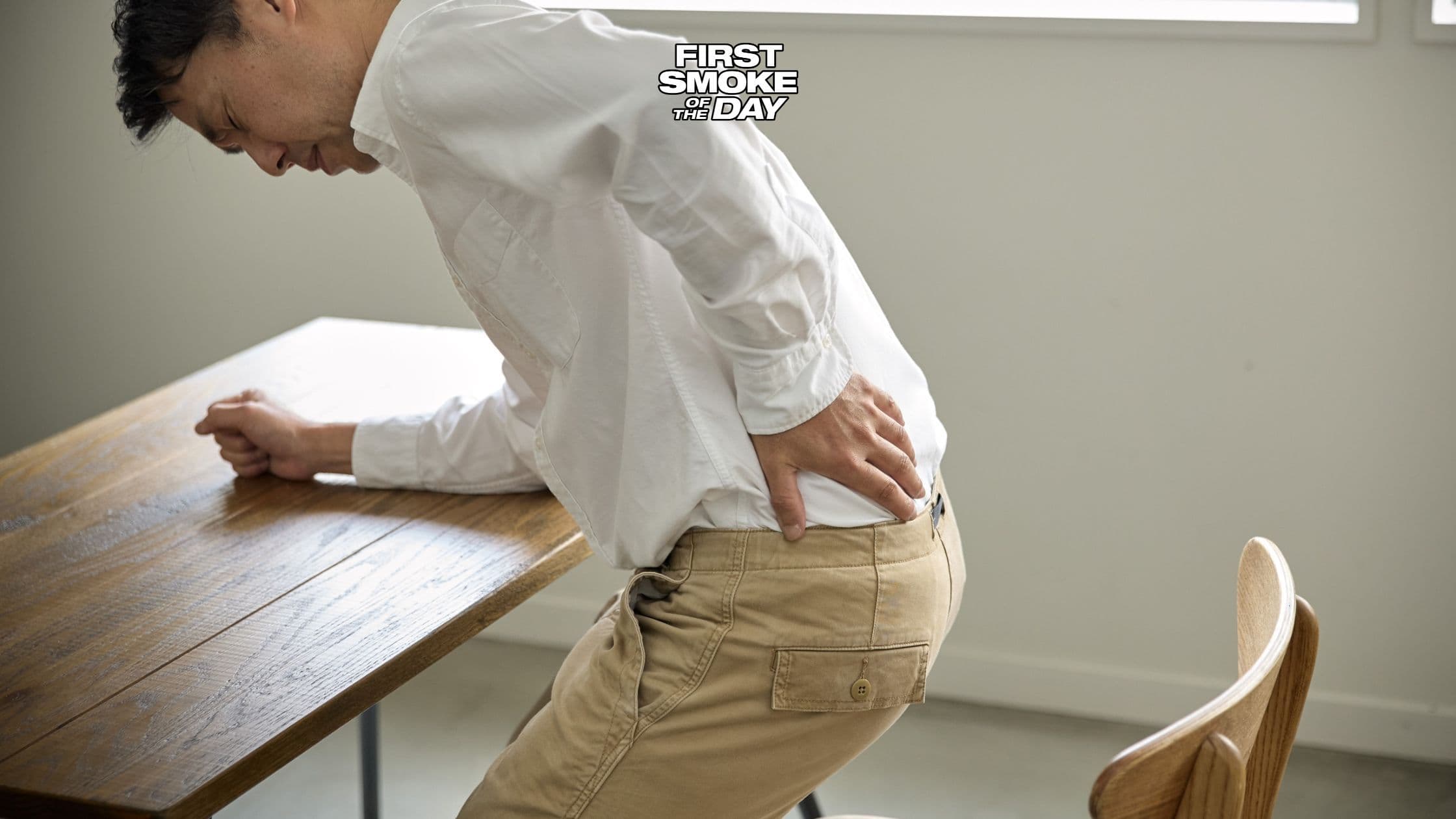
A decade-long study out of Israel is adding serious weight to one of the strongest arguments for medical cannabis. Patients with chronic low back pain who started using it slashed their opioid use, felt less pain, and moved through their days with less disability. And the effects held for ten straight years.
The study came from a team at Tel Aviv University, Rabin Medical Center, and Clalit Health Services. They enrolled 1,000 patients dealing with chronic low back pain, all of whom had never used cannabis before. Then they tracked each patient's pain, disability, and medication use once a year for a full decade at a specialized orthopedic pain clinic. That long timeline is what sets this one apart from the rest. The researchers say it's the longest follow-up of medical cannabis for this condition to date.
The headline results are hard to ignore. Over ten years, opioid use dropped by roughly 90%, measured in morphine milligram equivalents. Most of that drop happened fast, within the first year, and then held steady the rest of the way. Pain intensity fell by about 84%. Functional disability improved by around 30%.
Look at how many patients hit meaningful targets and the picture holds up. About 91% cut their opioid use by at least half. Around 62% hit a significant reduction in pain intensity, and the same share reached the goal for improved daily function.
There was a bonus effect, too. Patients didn't just walk away from opioids. Their use of several other heavy medications fell sharply as well:
The researchers note those cuts weren't ordered by the study. Individual doctors and patients made them as symptoms improved, which suggests cannabis may have been easing several problems at once, from pain to sleep to anxiety.
Here's where we slow down, because the researchers themselves did. This was a single-arm observational study, meaning there was no control group to compare against. That design cannot prove cannabis caused these results, and the team said so plainly. They also flagged something important. The improvements were so large that they "substantially exceeded" what earlier, more rigorous randomized trials have found, which points to observational bias inflating the numbers.
On top of that, only 638 of the original 1,000 patients made it to the final check-in. People who stick with a treatment for ten years tend to be the ones it's working for, and that self-selection can skew results. None of that erases the finding. It just means this is one strong signal, not a final verdict.
What makes this study matter isn't the single dramatic number. It's that it lands on top of a large and growing pile of research pointing the same direction. Other work this year found similar large, sustained improvements in back-pain patients cutting opioids. Federally funded studies have tied medical cannabis to reduced opioid prescriptions. Other research has linked legalization to fewer fatal overdoses. Different countries, different designs, same conclusion.
This article is based on reporting by Tom Angell for Marijuana Moment, covering a study published in the European Spine Journal. Read the original coverage at marijuanamoment.net.
This is a genuinely great result, and it's worth getting excited about. Here's why it hits harder than the usual cannabis headline. Opioid substitution is the strongest corner of medical cannabis science. It’s the place where the evidence runs deepest, and this study just pushed that evidence further than anyone has before. Ten years is a long time to watch people not only stay off opioids, but stay better. These patients cut their pain, dropped one heavy medication after another, and moved through their days with less disability, and it lasted. That's a lot of lives quietly improved.
Now zoom out, because the bigger picture is where you should really turn your focus. We’re still losing tens of thousands of people a year to an opioid crisis. Now, here's a full decade of data pointing to a plant that helped chronic-pain patients need far fewer of those drugs. And it isn't a one-off. It stacks right on top of study after study, across different countries and different methods, all pointing the same way. Cannabis helps people lean on opioids less, and places that legalize tend to see fewer overdose deaths. When the evidence keeps converging like that, it stops reading like a hopeful anecdote and starts looking like a public-health opportunity we're leaving on the table.
And that's the part worth sitting with for a second or two. Findings like this keep rolling in, and yet cannabis is still classified in a way that makes it maddeningly hard to study and to actually prescribe here in the US. Chronic-pain patients are being kept at arm's length from something a growing mountain of research says could help get them off opioids. The science is doing its job. It's the policy that hasn't caught up. Studies like this one are how that gap finally closes, one decade of data at a time. That's not just good news for back-pain patients. It's another crack in a wall that's been standing for far too long. Follow FSOTD for new exclusive podcast episodes and more updates directly from the culture.
Membership gets you full episodes, behind-the-scenes, and more. Start with a free trial.
Start Your Free Trial